
Low milk yield in cows is usually due to one of seven things: bad feeding, lack of minerals, overheating, gut health problems, udder infection, stress after giving birth, or not having a good water supply and daily routine. On the bright side, most of them can be rectified within 14 days once you identify the exact problem and how to tackle it.
Low Milk Yield in Cows: Why Is Your Cow Giving Less Milk?
A fall or a slow decline of milk yields is usually linked with feeding imbalance, a health condition, or environmental factors. Most commonly, the reasons behind low milk production in cows are diet deficiencies, lack of trace/mineral nutrients, extreme weather, digestion problems in the rumen, and a slight mastitis condition as well as the milk slump, which occurs after giving birth or in late lactation periods. Determine the one factor that is causing the milk drop in your cow as an initial measure to revitalize the milk yield of the cow.
1. Fix Nutritional Gaps First
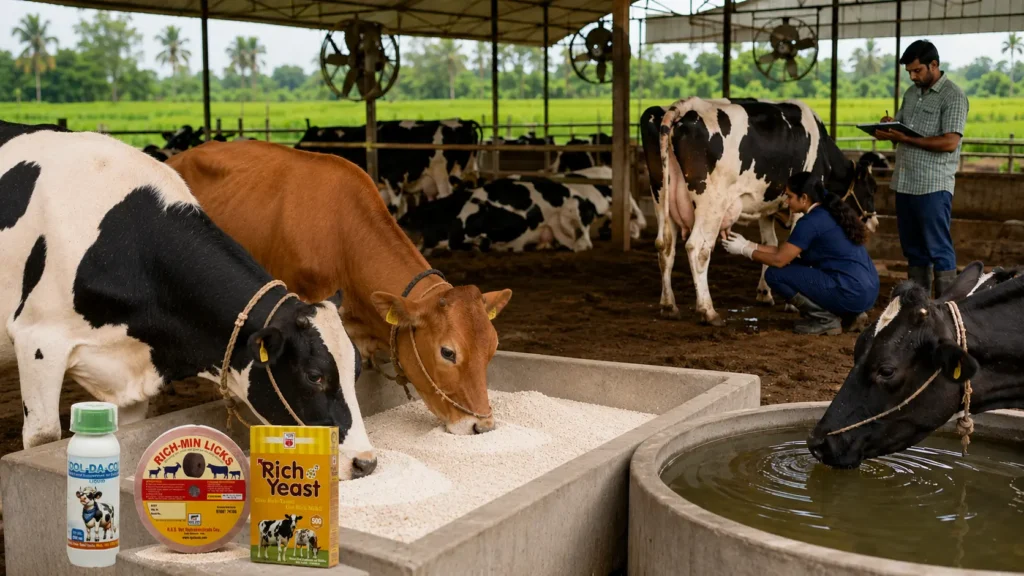
Milk synthesis takes energy and protein. This is the main area of dairy cow nutrition for milk production; if a cow is feeding on old, low-quality, or unbalanced fodder, her body simply won’t be able to give the basic materials required in milk synthesis, no matter how healthy she appears. Give her a combination of fresh grass fodder and well-balanced feed concentrate, and maintain an efficient feed conversion through a rumen-friendly diet rather than one with high proportions of filler.
2. Add a Daily Mineral Mixture
Trace minerals like zinc, copper, selenium, and magnesium are playing a major role in hundreds of body activities related to milk and reproductive performance. When a cow is seen licking a wall, soil, or even her own coat, this is an indication of a mineral deficiency in cattle. RGS Vet’s Rich-Min Lick has been designed to be a mineral feed supplement that boosts milk yield mainly through continued daily use and not relying on symptoms as a sign.
3. Manage Heat Stress in Summer
When ambient temperature rises to over 25-27°C, a cow will redirect her energy for self-cooling and not for milk production; that is why summer brings drops in milk yields, and humid monsoon periods overlap, bringing lower yields too. Shade fans, additional water and electrolytes really matter. Cool-Da-Cow Tonic from RGS Vet helps support cattle immunity precisely against such seasonal heat stress.
4. Support Digestion with Probiotics or Yeast Culture
A cow might have an ample diet and still not perform well if her rumen is not able to process the feed that efficiently. Probiotics and yeast cultures enhance digestive capacity and the feed conversion rate, i.e., a greater proportion of her intake goes into milk. Rich Yeast by RGS Vet is one of the most recommended supplements for raising the milk yield of dairy cows, and it works by naturally boosting digestive efficiencies.
5. Watch for Mastitis Early
An infected udder causes swelling, heat, and clumpy, watery, or blood-streaked milk. This is no sign of deficient nutrition; veterinary services should be contacted at once since it’s an udder-related infection. Supplements will not replace a proper mastitis treatment, but timely intervention will help preserve udder function and also improve milk yield over time, mainly in cows.
6. Time Reproduction and Calving Right
In late pregnancy, milk yield is naturally lower and then reaches its peak around 6-8 weeks after calving. The right support of calving interval and post-calving recovery helps a cow to be productive again sooner. RGS Vet’s Fertrich Tonic helps maintain not only reproductive health but also the quality of colostrum and recovery from lactation around calving time.
7. Keep Water, Routine, and Housing Consistent
Milk is approximately 87% water, so dehydration can drastically reduce milk production even in mild cases since a high-yielding cow calls for 80 to 100+ liters of clean water a day. Apart from water, a farmer should realize the importance of routine consistency: the same milking time, the same worker, gentle treatment, and clean and comfortable housing are all significant factors in increasing the productivity of dairy farms.
How Soon Will You See Results?
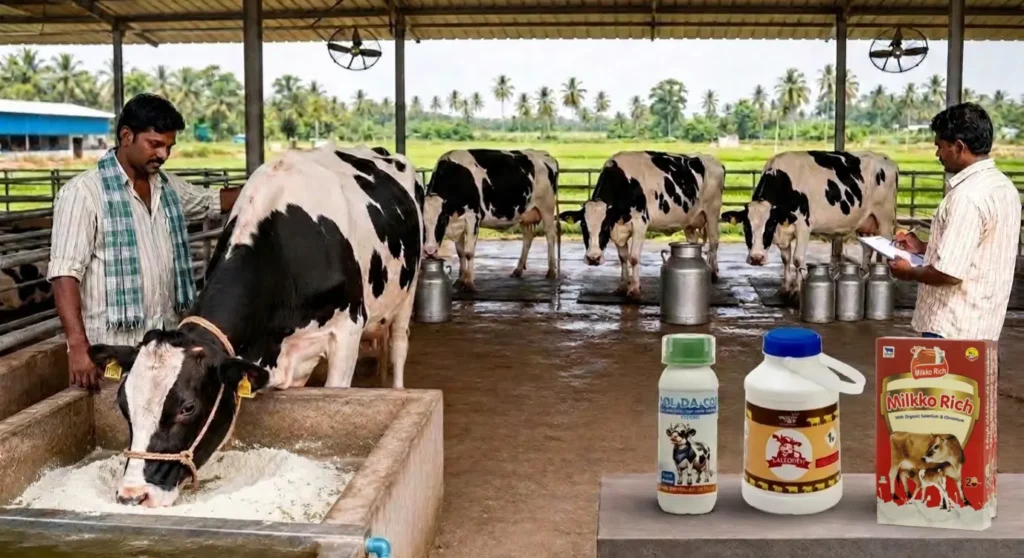
If you address the underlying causes of Low Milk Yield in Cows early, most dairy farmers notice gradual improvements in milk production within one to two weeks. Though, full recovery yielding the highest productivity can occur a few weeks after the treatment, depending on the cow’s condition and lactation period.
Frequently Asked Questions
1. What are the main causes of Low Milk Yield in Cows?
Typically, an abrupt decrease indicates heat stress, an early mastitis infection, or recently changing the feed type. Initially, look at the udder and temperature of the body and seek help from a vet in case the decline is steep enough.
2. How do I increase milk production in my cows naturally?
The four levers that help to increase production of milk are balanced fodder, mineral supplements every day, an unlimited supply of fresh water, and maintaining a peaceful routine.
3. What is the best supplement to increase the quantity of milk production in dairy cattle?
It would depend on the type of deficiency that needs to be corrected because mineral mixes such as Rich-Min Lick correct one kind of deficiency while Rich Yeast does another.
4. How do I increase milk production from Indian cows during summer?
Cooling and shading should be your priority along with your usual ration because heat stress is the number one yield robber during summers for Indian cows.
Ready to Solve Low Milk Yield in Cows?
With proper nutrition, mineral supplementation, heat stress management, and timely veterinary care, Low Milk Yield in Cows can often be corrected before it affects your farm’s profitability. RGS Vet offers scientifically formulated supplements to support healthier cows and consistent milk production.