
Milk production is one of the most important factors determining the profitability of a dairy farm. Many dairy farmers ask how to increase milk production in cows naturally without relying on hormones or unsafe practices. The answer lies in a combination of balanced nutrition, proper herd management, quality forage, clean water, and scientifically formulated feed supplements.
Healthy dairy cows produce more milk when they receive the right nutrients throughout the lactation period. Whether you rear indigenous, Jersey, or HF cows, following a structured feeding program can significantly increase milk production in cows, improve milk quality, and enhance overall animal health.
Balanced Nutrition Is the Foundation of Higher Milk Yield
Proper dairy cattle nutrition directly influences milk quantity and quality. A balanced ration should provide sufficient energy, protein, fiber, vitamins, minerals, and fresh drinking water. Green fodder, dry fodder, and concentrate feed should be offered in the correct proportion to support rumen health and efficient digestion.
Fresh green fodder such as CO-4 Napier grass, maize fodder, sorghum, and cowpea supplies digestible nutrients that promote healthy rumen microbes. Dry fodder like hay or paddy straw provides the effective fiber needed for proper rumination. Concentrate feed supplies additional energy and protein required during peak lactation.
Providing a balanced cattle feed every day helps improve feed efficiency, supports digestion, and contributes to consistent cow milk production.
Improve Milk Yield with Proper Feed Supplements
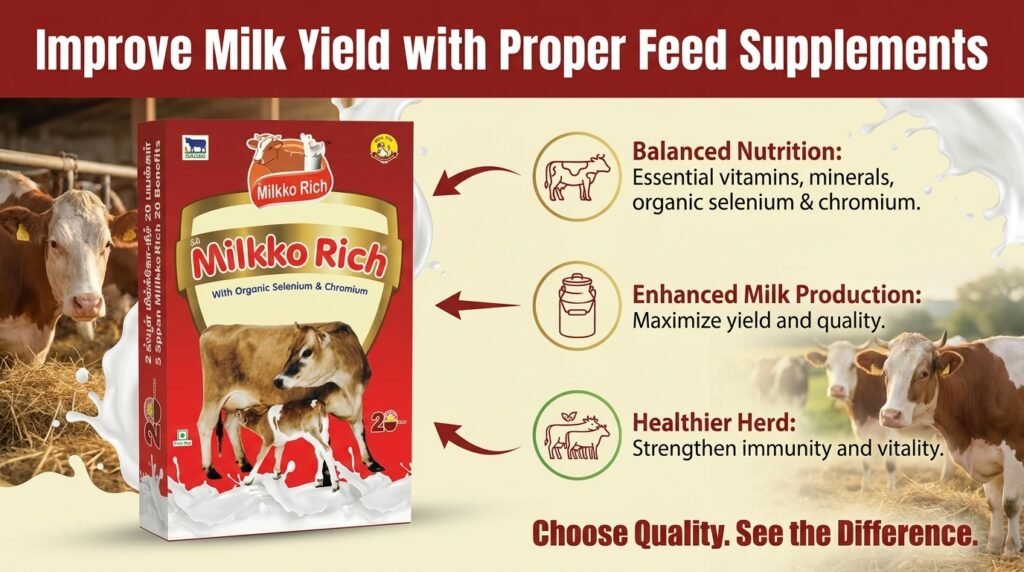
Although cows may be fed a balanced diet, deficiencies can still occur due to changes in the quality of fodder or increased nutrient demand during the lactation period. Highly efficient feed supplements can be a great help. They supply the missing nutrients and contribute to better milk production.
Milkko Rich is a nutritional supplement from RGS Vet. It is intended to provide extra nutrients to dairy cows and their regular feed, Because of this helping to achieve better lactation results. Working alongside other components of a well-balanced diet, it can aid in not only maintaining the body condition of the animal but also promoting feed efficiency and natural milk production enhancement.
Proper mineral intake by cows is a must. RGS Vet’s CalceRich offers a calcium and mineral rich white powder that goes a long way towards better bone strength, muscle functions, and typical milk production which is highly dependent on calcium Mainly at early lactation and post calving periods.
Good rumen health is crucial to extracting nutrients from food. Rich Yeast, RGS Vet’s nutritional supplement, contains active yeast that fosters a thriving rumen microbial ecosystem, or fermentation process, thereby leading to better digestion, higher feed efficiency, and greater nutrient utilization capability of cows. This results in increased milk output and better overall performance of cows.
The Importance of Clean Drinking Water
Water is often the most overlooked nutrient in dairy farming. Since milk contains nearly 87 percent water, lactating cows require unrestricted access to fresh, clean drinking water throughout the day. Depending on weather conditions and milk production, a dairy cow may consume between 60 and 100 litres of water daily.
Insufficient water intake can quickly reduce feed consumption, affect digestion, and lower milk production. Ensuring continuous access to clean water is one of the simplest and most effective natural ways to increase milk production in cows.
Feeding Management for Higher Milk Production
Consistency in feeding is very important to keep rumen functioning stable. Dairy farmers are advised to stick to the same feeding time every day and allocate concentrate per milk yield.
Practically, one can start giving green fodder in the morning, concentrate during milking, dry fodder in the afternoon, and finally additional green fodder with mineral supplements in the evening. Such a feeding scheme improves digestion and ensures continuous nutrient supply throughout the day. Besides, body condition, feed intake, and milk production should be regularly checked to help the farmers make the necessary changes in their feeding program.
Cow Health Directly Affects Milk Production

Healthy cows naturally produce more milk. Preventive healthcare, routine deworming, vaccination, hoof care, and mastitis prevention are all essential components of successful dairy farm management.
Stress can also reduce milk yield. Providing clean housing, proper ventilation, adequate shade during summer, and comfortable resting areas helps minimize heat stress and improves animal welfare.
During hot weather, feeding highly digestible fodder, ensuring sufficient water availability, and maintaining proper ventilation can help reduce the negative effects of heat stress on milk production.
Nutrition After Calving
The weeks immediately after calving are critical for dairy cows. Nutrient requirements increase rapidly as milk production begins. Feeding high-quality forage, energy-rich concentrate, and appropriate mineral supplements during this period supports recovery and helps cows reach their peak milk production potential.
Calcium supplementation is especially important after calving to maintain normal muscle function and reduce the risk of metabolic disorders. Incorporating products such as CalceRich into a veterinarian-recommended feeding program can help support cows during this demanding stage.
Practical Tips to Increase Milk Production Naturally
Farmers can improve milk yield by following these proven management practices:
- Feed high-quality green and dry fodder daily.
- Provide a balanced concentrate ration based on milk production.
- Ensure unlimited access to clean drinking water.
- Use scientifically formulated nutritional supplements like Milkko Rich, CalceRich, and Rich Yeast as part of a balanced feeding program.
- Maintain proper hygiene during milking.
- Reduce heat stress with adequate shade and ventilation.
- Monitor cow health through regular veterinary check-ups.
- Follow a consistent feeding and milking schedule.
Conclusion
Understanding how to increase milk production in cows naturally requires more than simply increasing feed quantity. Sustainable milk production depends on balanced nutrition, quality forage, effective rumen health management, mineral supplementation, clean water, and excellent herd management practices.
For dairy farmers looking to improve productivity naturally, combining a balanced feeding program with scientifically developed nutritional solutions from RGS Vet, including Milkko Rich, CalceRich, and Rich Yeast, can help support healthy dairy cows, better feed utilization, and improved milk yield. When integrated into a well-managed dairy nutrition program, these supplements contribute to long-term herd health and sustainable dairy farming success.
Frequently Asked Questions
1. How can I increase milk production in cows naturally?
Provide a balanced diet, quality fodder, clean water, and proper nutritional supplements while maintaining good herd health.
2. Which feed is best for increasing milk production?
A combination of green fodder, dry fodder, concentrate feed, and supplements like Milkko Rich, CalceRich, and Rich Yeast supports higher milk yield.
3. Does green fodder increase milk yield?
Yes. Green fodder improves digestion, rumen health, and nutrient intake, helping cows produce more milk naturally.
4. Can mineral supplements improve milk production?
Yes. Mineral supplements help prevent nutrient deficiencies and support healthy milk production, especially during lactation.
5. How much water does a dairy cow need daily?
A lactating dairy cow typically needs 60–100 litres of clean water each day.
6. What causes low milk production in cows?
Poor nutrition, lack of water, mineral deficiencies, heat stress, diseases, and improper feeding practices are common causes.
7. How can I improve milk production after calving?
Feed high-quality forage, maintain proper hydration, and provide balanced nutrition with appropriate supplements.
8. Is Rich Yeast good for dairy cows?
Yes. Rich Yeast supports rumen health, improves digestion, and helps cows utilize feed more efficiently.
9. How can I maintain milk production during summer?
Reduce heat stress by providing shade, plenty of clean water, proper ventilation, and a balanced diet.
10. Which RGS Vet products support natural milk production?
Milkko Rich supports lactation, CalceRich provides essential calcium, and Rich Yeast promotes healthy digestion and feed efficiency.