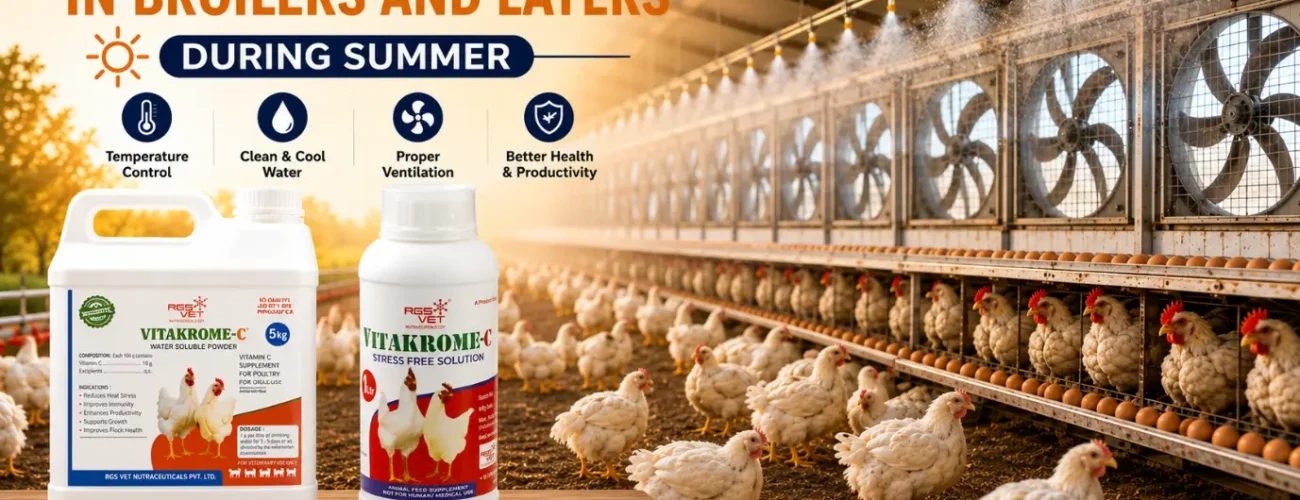
High summer temperatures above 32 degrees Celsius can cause poultry birds to get heat-stressed. As a result, the intake of feed reduces by about 15%, while egg production drops by 20-30%—this is more common with laying hens. Broiler and layer farming during peak temperatures would make heat stress management in broilers and layers one of the farmer’s top priorities. RGS Vet came up with this article to describe signs of heat stress in poultry, housing modifications, and necessary ingredients that the bird’s diet should contain to stay healthy during this season.
What Is Heat Stress in Poultry?
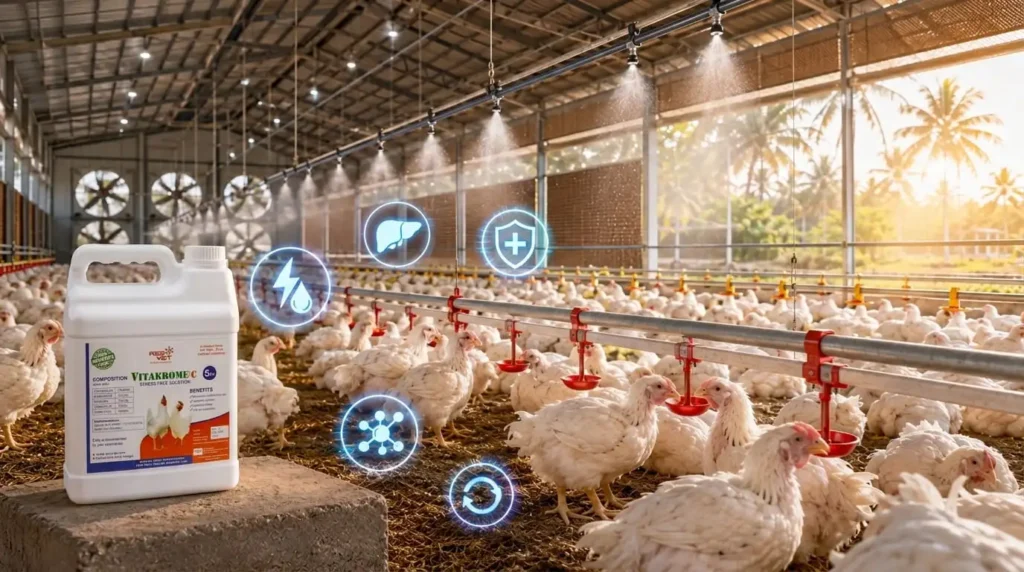
Heat stress is a situation where birds are unable to stay within their thermoneutral zone (generally 18-24°C for most bird breeds) by regulating body temperature. Birds are unable to use sweat like humans. Because of this, as outside environmental temperatures pass the comfort temperature range, the birds cool themselves exclusively via gaping, which is very ineffective and leads to hormone disturbance, lower immunity, and loss of productivity.
Signs of Heat Stress in Broilers and Layers
Catching the signs of poultry heat stress early will help you manage the situation before losses will be evident from the weighing scale or decreased numbers of eggs in the trays. The warning signs include:
- Panting breathing/open-beaked breathing
- Feathers being drawn away
- Fewer grains but more water
- Lethargic birds and a group crowing around the cool spots
- Abrupt daily reduction of the layer’s daily egg production
How Heat Stress Affects Broiler and Layer Performance
The effects on birds vary a lot; that is why the same summer plan doesn’t fit all. In heat-stressed broilers, this situation hampers weight gain, increases feed conversion ratio (FCR), and raises the risk of mortality throughout the growth period. For layers under heat stress, the consequences include decreased egg production, weaker eggshells, and reduced hatchability—because the energy normally used to produce and form eggs gets rerouted to cool the body down.
Housing and Shed Management for Summer
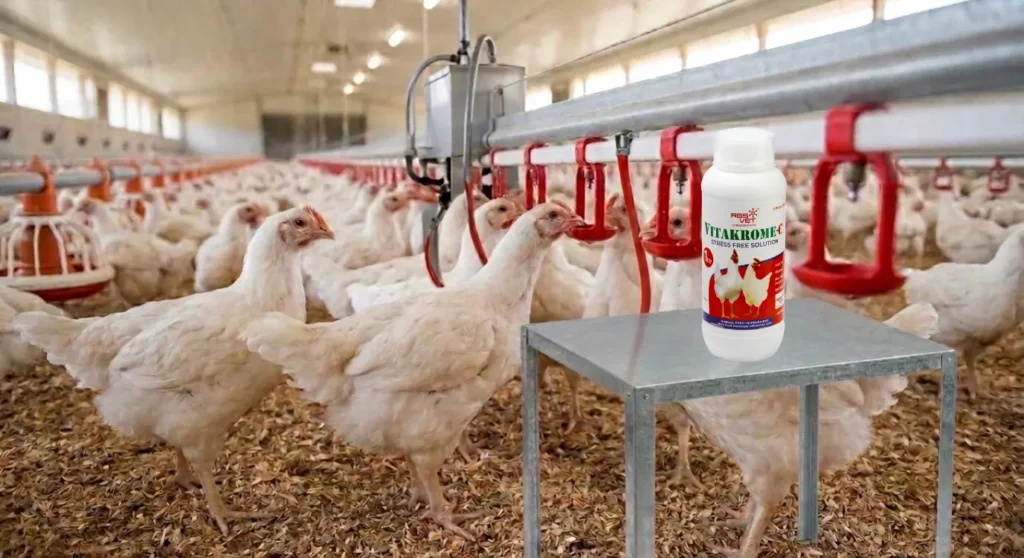
Effective summer management practices in poultry production are your greatest protection against losses, and virtually all of them are inexpensive to carry out:
- Improving air circulation inside the poultry house
- Installing a sprinkler and fogging system for poultry when temperatures exceed 35°C
- Whitewashing or thatching the roof to regulate temperatures inside poultry houses
- Reducing stocking densities to avoid overcrowding and buildup of heat
- Feeding and Water Management During Heat Stress
Digestive processes generate more heat in birds, so it is important to keep track of the timing of feeding as well as its quantity. Feed can be given at cooler times such as early morning and late evening and should be avoided during the hours of 10 AM to 4 PM. Water intake in summer should always be kept high, and it is very important to keep it clean and cool.
Best Supplements for Heat Stress in Poultry
Modifications to housing and feeding lessen heat stress, but it is the addition of supplements that facilitates recovery from the heat strain:
The use of an electrolyte supplement for poultry restores electrolyte balance and compensates for electrolytes lost through panting.
Vitamin C, like RGS Vet’s Vitakrome C, lowers oxidative stress and boosts immune functions of broilers.
How to Prevent Heat Stress in Poultry — Quick Checklist
- Enhance the ventilation and air circulation in the poultry house.
- Make sure to feed the birds at a lower temperature.
- Provide consistent access to cold, fresh water.
- Lower stocking density in summer
- Use RGS Vet’s products Vitakrome C.
Conclusion
Heat stress management in boiler and layer is based on three ideas applied continuously: optimizing the buildings’ conditions, feeding at the right times, and providing the right nutrition. By preventing heat stress, poultry producers can ensure that broiler growth and layer egg production do not suffer throughout summer.
Protect your flock this summer with RGS Vet’s trusted poultry supplements!
✅ Vitakrome C – Supports hydration, reduces heat stress, and boosts immunity.
🛒 Buy Now: https://rgsvet.com/vitakrome-c/
Need expert advice? Contact the RGS Vet team today to find the right heat stress management solution for your poultry farm and ensure healthier, high-performing birds all summer long
FAQs
1. How does heat stress impact egg production in layers?
It decreases the daily number of eggs laid. Eggro and Vitakrome C from RGS Vet are useful to keep the egg production of the layers stable in hot weather.
2. How can I reduce broiler mortality during the summer?
Improve ventilation, feed during the cooler part of the day, and use electrolytes for poultry heat or RGS Vet Vitakrome C.
3. What is the ideal supplement for heat stress in birds?
A combination of electrolytes, vitamin C, and liver support. With antibiotics and hormone-free formulation, RGS Vet’s Vitakrome C meet this need.
4. Heat stress begins in poultry at what temperature?
Above 30-32°C in the poultry house. Supplement early with RGS products, not when symptoms occur.
5. Is heat stress more detrimental for broilers than for layers?
Yes—broilers suffer from decreased growth and FCR, whereas egg count and quality are affected with layers. RGS offers Vitakrome C for broilers for layers.